

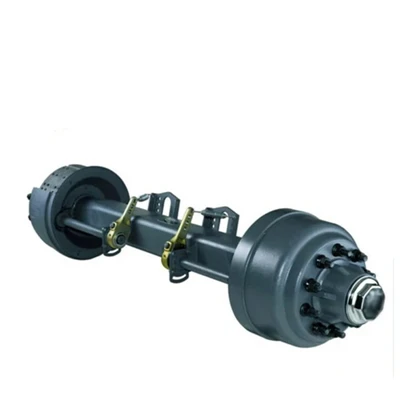
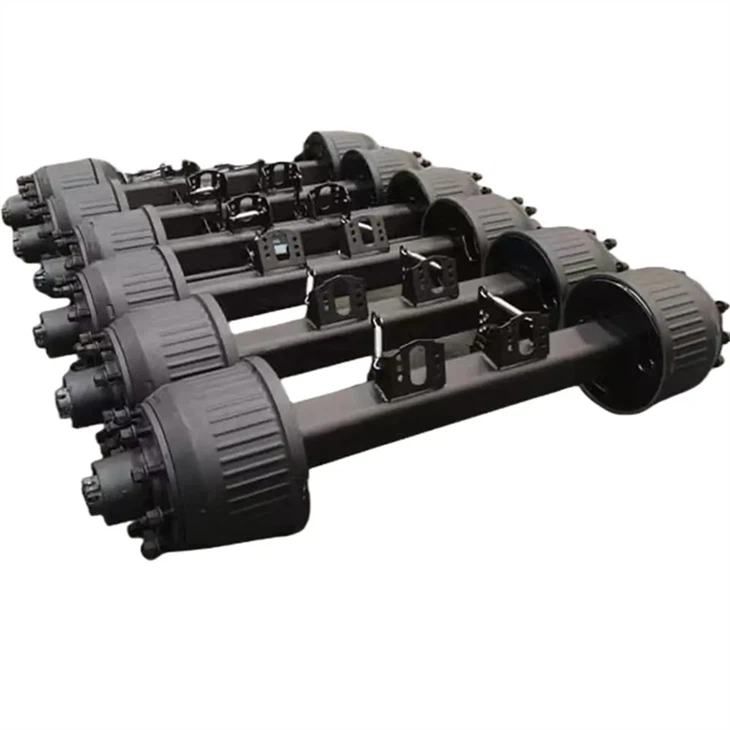
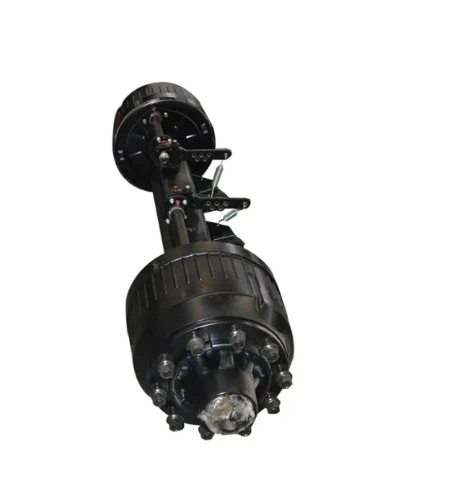
Trailer Axle
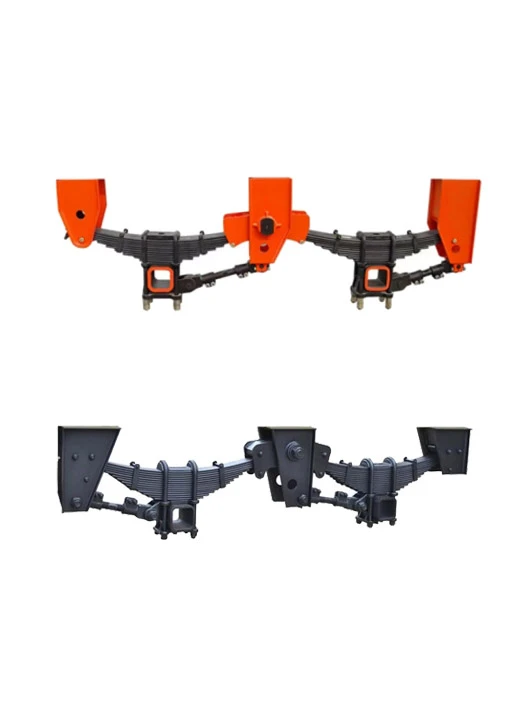
Cangzhou Saixin Trading Co.,Ltd.
The factory was established in 1997 and has a development history of more than 25 years. At present, a comprehensive enterprise integrating production, R&D and sales has been formed. We can produce the goods that customers need according to their different requirements, and will provide customers with more competitive prices while ensuring quality. At present, our company's products are sold well in more than 20 countries in Africa, Asia, and South America, and are deeply loved by customers and friends.
Why Choose Us
Experience
The factory was established in 1997 and has a development history of more than 27 years.
Production
Semi trailer suspension, leaf spring, semi trailer, brake drum, wheel hub, fifth wheel, landing gear, brake shoes, brake chamber, air filter.,etc.
Technology
We can produce the goods that customers need according to their different requirements, and will provide customers with more competitive prices while ensuring quality.
R&D Team
At present, a comprehensive enterprise integrating production, R&D and sales has been formed.
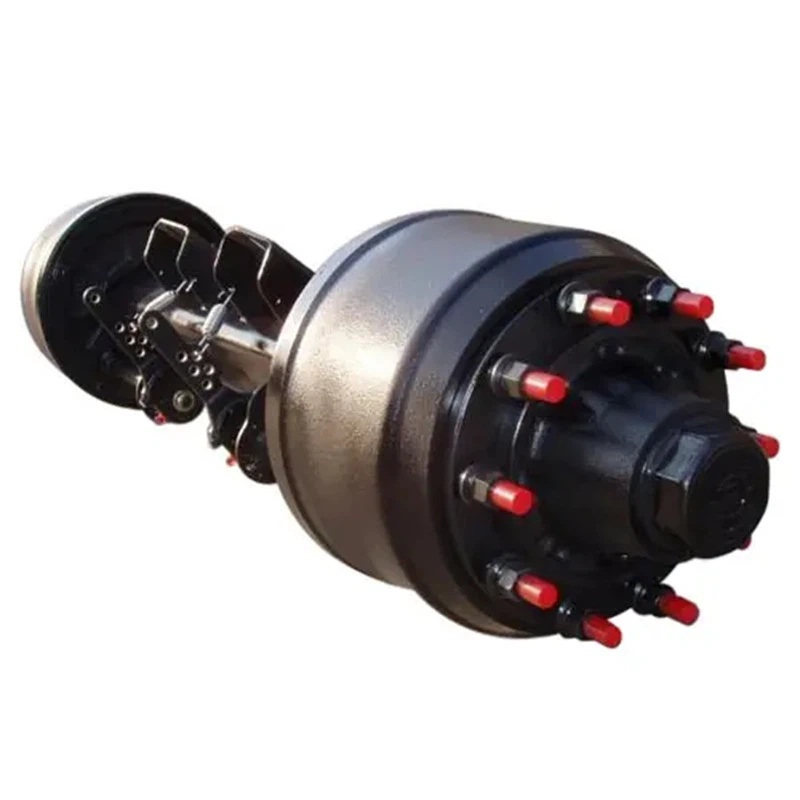
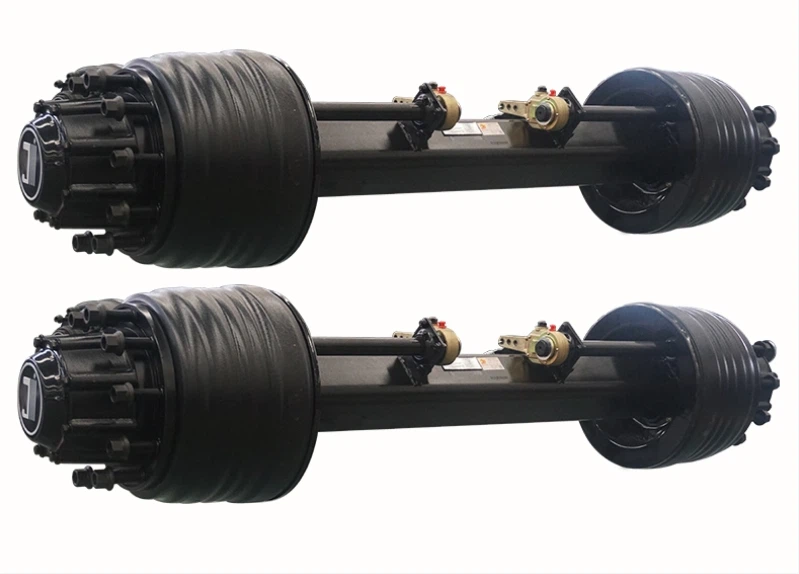
What Is an Axle?
A key component of your vehicle, the axles are central shafts that connect to the wheels. They typically turn with the wheels, according to Car From Japan. Since axles control the power that propels the wheels, every vehicle has to have axles in order to operate.

In most cases, trailers have two or three axles to turn the wheels. Larger vehicles that carry more passengers and have more wheels may have more axles.
It's easy to determine the number of axles on your car or any other vehicle. Just look at your car from the side and count the tire pairs. Most cars have a total of four tires, or two sets of tires, one on the front and one on the back. Two sets of tires equals two axles.
Several factors determine what type of axle a vehicle needs. For example, the technical requirements and the amount of force produced go a long way in deciding the axle type.
Some vehicles have pre-designed axles in standard formats. Others have customized axles that fit the needs and specifications of the car. Customized axles tend to work best for cars since they allow for more personalized control over the wheels. These axles can adjust the wheels' speed and torque to a finer degree.

The Difference Between American and German axles
When it comes to vehicles, the type of axle used can make a big difference in how the vehicle handles, performs, and lasts over time. Among the most widely used types of axles are American-style axles and German-style axles, each of which has distinct advantages and characteristics.
American-style axles are designed with strength and durability in mind, built to withstand the rugged terrain and heavy loads commonly encountered in the United States. They often have a heavier build and wider stance for added stability. Additionally, American-style axles typically use a larger axle shaft for increased strength and are designed to be more easily serviced and repaired.
German-style axles, on the other hand, are designed with a focus on efficiency, precision, and reliability. They typically have a more compact design that provides better handling and maneuverability, making them ideal for navigating through narrow streets and crowded areas. German-style axles are also known for their high-quality manufacturing standards, which deliver exceptional performance and long-lasting durability. The most popular German-style axles include the Volkswagen swing axle and the BMW final drive.
Both American-style and German-style axles have their unique advantages, and the choice between the two ultimately comes down to personal preference and the specific needs of the vehicle owner. But regardless of which type of axle is chosen, it's important to ensure it's properly maintained and regularly serviced to ensure safe and reliable operation.
In conclusion, the differences between American-style and German-style axles are largely based on their design and intended use. Both types have their own unique strengths and performance capabilities, and the choice between them should be based on the individual needs of the vehicle owner. Whether you're looking for strength and durability or precision and efficiency, there's an axle design perfectly suited for your vehicle and driving needs.

Axles come in three standard types:
Rear Axle: This axle is responsible for delivering power to the driving wheels. It comes in two halves, known as half shafts, which are connected by the differential. In most cases, rear axles are live, meaning they rotate with the vehicle's wheels.
Front Axle: Located in the front of the vehicle, this axle is responsible for assisting with steering and processing shocks from the uneven surface of the road. They have four main parts, which are the beam, the swivel pin, the track rod, and the stub axle. Front axles must be as sturdy as possible, and that's why they're usually made from carbon steel or nickel steel.
Stub Axle: Stub axles are attached to the vehicle's front wheels, with kingpins connecting these axles to the front axle.
Semi-Floating Axle: This rear axle connects the wheel to the flange on the exterior of the axle shaft and holds it securely. One bearing supports the axle shaft, and the other goes inside the axle casing. Since it has two bearings, a semi-floating axle needs to be larger than the other options to produce the same torque. Semi-floating axles are used for cars, SUVs, and mid-size trucks, such as half-ton and light duty pickups.
Full-Floating Axle: True to its name, this axle type effectively floats in place and maintains its position, thanks to two bearings. It's designed to transmit driving torque only. Full-floating axles tend to work best for larger vehicles, such as heavy-duty trucks. Some mid-size trucks that have larger towing capacities or those that use four-wheel drive extensively can also benefit from full-floating axles.
Three-Quarter Floating Axle: It's more complex than the semi-floating axle and also more reliable. It helps maintain wheel alignment and handles side thrust and driving torque.
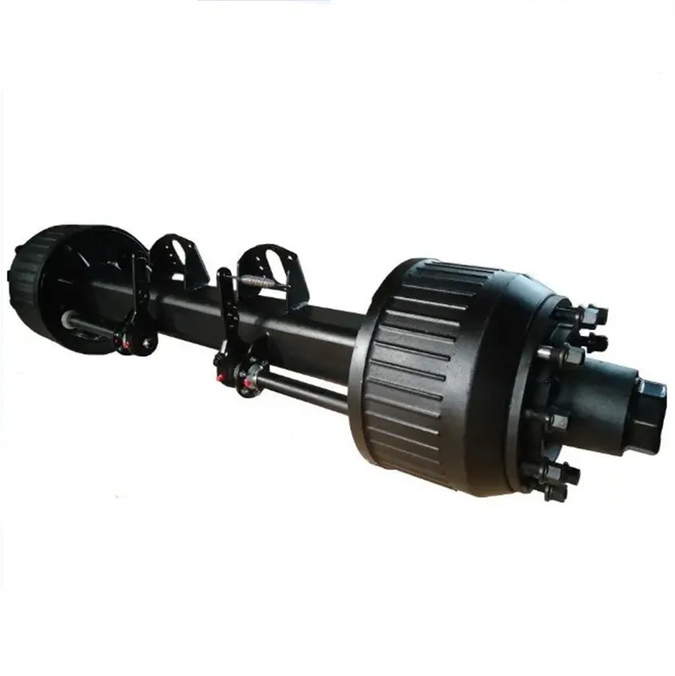
Different Types of Semi-Trailer Axles
Semi-trailer suspension systems do the important job of minimizing harsh movements and protecting the semi-trailer and its freight. Suspension systems include the parts that connect the trailer and truck to the wheels to facilitate better ride quality and road handling, such as tires, axles, and affiliated hardware.
Each of these components plays an integral role in the performance of a trailer. They're also an important factor when looking at semi-trailers for sale or rent because the suspension system determines a trailer's load capacity, maintenance costs, and driving stability.
As with most vehicles, there are many options to choose from when selecting the right suspension system for your trailer. For heavy haul trailers, axles play a prominent role in trailer operation. They not only allow wheels to move but also bear the weight of the load.
Just like there are different types of suspension systems there are also different types of trailer axles. Here you'll learn about the most common trailer suspension systems and the various semi-trailer axles that go with them.
Rebum aliquayam dolor ipsum stet est mangna sea eirmod. Invidunt ipsum justo rebum erat rebum et. Labore labore amet vero et est. Accusam sit justo. Vero rebum tempor dolore et est kasd. Justo diam no lorem no, duo aliquyam diam sea accusam slitr. Accusam magna clita dolor dolor, dolor at dolor accusam dolores elitr justo dolor accusam nonumy. magna dolor magna eirmod
Tandem Axles
Most semi-trailers have tandem axles. This term refers to the placement of 2 sets of axles spaced one right behind the other. Typically, tandem axles are approximately 5 feet apart and this proximity offers trucks certain benefits.
From time to time, tires may incur damage. Tandem axles allow you to stop your trailer before serious damage is done. The additional tire is near enough to alleviate the burden of weight from the damaged tire.
Load distribution is also affected by tandem axles. More axles allow your load to be distributed over a larger portion of the frame helping your trailer bear the weight.
Common practice is to slide tandem axles forward or backward to support weight where you need it most. Newer dry vans often come with air-slide suspension to aid in moving tandem axles.
Pros of Tandem Axles
Extra tires enable trailer to carry more weight
Greater stability at high speeds and in highway conditions
Easier to maneuver and back up
Spread Axles
Spread axle trailers have single axles spaced out a minimum of 10 feet apart. While spread axle trailers are known for their flexibility, they're also infamous for the wear and tear they inflict on their tires.
Each spread semi-trailer axle is treated individually which allows a single axle to carry 20,000 pounds. This means spread axles can carry 40,000 pounds which gives you more leeway when placing a heavier load.
In certain states, like California, trailers over 48 feet long need to have a kingpin to the center of the rear axle at 41 feet. This can be challenging to do with a semi-trailer with spread axles.
Spread axles tend to be better for long hauls and are also called "split" tandems.
Pros of Spread Axles
Increased stability when loading and unloading trailer
Easier to balance on scales
Longer wheelbase makes spread axles more stable
Leaf Spring Axles
As one of the more commonly used types of axles, leaf spring axles are part of a spring suspension system, which flexes to let the wheels on a semi-trailer move independently from the truck body. This is especially useful when driving on uneven roads.
Leaf springs are overslung (straight axles) or underslung (straight axles and drop axles) on the semi-trailer's axle as a group of curved and stacked springs, also known as leaves. They come in single, tandem, and tridem variations depending on the number of axles and weight being carried. Tandem and tridem are connected with an equalizer that aids in better weight distribution over the axles.
Springs are rated by their stiffness, known as the spring rate, which is the amount of force it takes to compress the spring 1-inch, expressed in pounds per inch (lb/in). A lower spring rate provides a more comfortable ride but may not always be the best for trailer/truck handling, especially commercial trailers that haul heavy loads. Thus, a higher spring rate may be more ideal for semi-trailers.
Pros of Leaf Spring Axles
More even wear on tires
Less expensive to repair and replace
Durable

A vehicle's window sticker reveals the fuel economy data for the standard axle ratio. If the truck has a custom axle ratio option, the fuel economy is automatically lower.
It's impossible to compare different automakers' optional axle ratios. The various tire sizes affect the system gear, which impacts the final figure.
Many dealers refer to lower axle ratios as tall gears and higher axle ratios as short gears. The former usually have better gas mileage, while the latter can generally haul heavier loads.
Axles are just one of the features that are essential for keeping your car on the road. Learn more about our favorite cutting-edge features in our comparison tests and first drive reviews.
Triple axles are mainly used to carry heavy loads while also providing such benefits as better tire capacity, a smoother ride, improved tracking, and proper load distribution. You may be wondering why you need to place three separate axles under your truck instead of using just one large axle. Using a single axle is too risky even when the load is only moderately heavy.
There are several reasons why you should opt for three axles. For one, you need heavier tires with better capacity to carry additional weight. When you have a single axle in place, damaging one tire can be a major problem. If, on the other hand, you have around two to three tires for each side, it's possible to stop before severe damage is done. Having more axles also means that the load in your vehicle will be spread out over a large portion of the frame, which adds strength to the system.
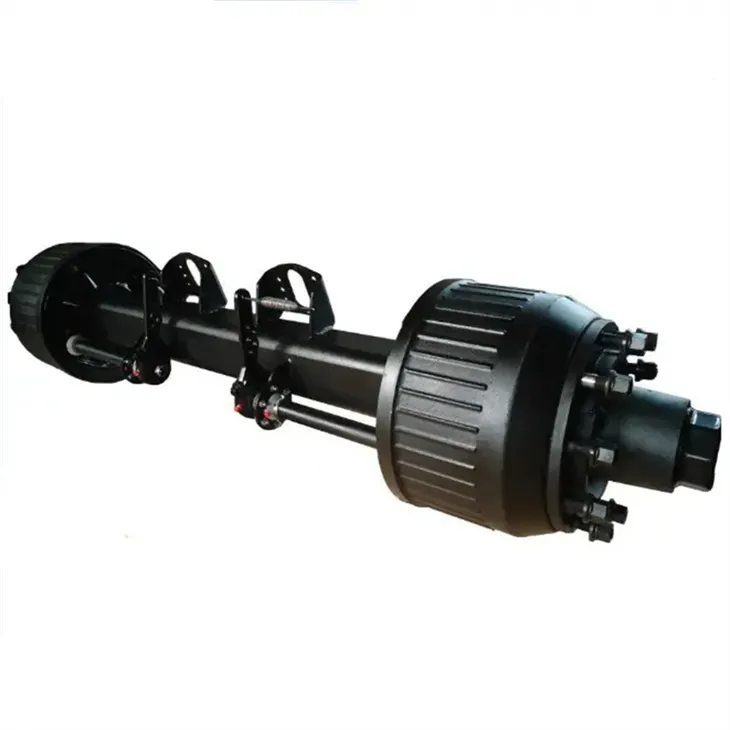
Axle - Considerations In Choosing A Trailer Suspension
When you're searching for the right trailer suspension, there are several factors to consider, which include everything from load sharing to stability. You should also consider how the trailer is going to be used and what environment you'll be driving in. For instance, will the conditions be wet or dry? You should also consider how often you'll be driving off-road. If you select multiple axles, it's essential that they work together and accommodate uneven ground. There's no reason to buy multiple axles if they don't offer load sharing.
To understand how dangerous it can be when axles don't properly share the load, think about what happens when a trailer that has tandem axles but not suspension or springs goes over a speed bump. In this situation, the first wheel will rise when the bump takes place. Since there isn't any equalization, the back wheel could respond by lifting off the ground as well. Now imagine that your trailer has tandem axles as well as an equalizing suspension. When the initial wheel goes over a bump, the equalizing suspension will move to the back wheel, which keeps it in place on the road.
It's also highly recommended that you focus on making sure the axles remain stable while under the trailer. When you first mount the axles, look for any signs that one or more of the axles has resistance to it. If this occurs, the axle wasn't mounted correctly.
After you mount your axles, it's important that you establish a solid connection with the frame. If you use a single-axle leaf spring, the forward area of the spring will serve as an arm that trails away from the frame. This option allows for a stable connection when you're mounting an axle.
When you choose tandem leaf spring axles, the back axle will be the leading arm. This connection doesn't have the same amount of stability. Even though the connection lacks stability, it will become stable when the vehicle is in motion. Because of how this connection occurs, the brakes may be placed along the front tandem axle without being added to the back one.
If you use slipper-style leaf springs, the back axle springs will be pinned to the equalizer to create a trailing arm for every axle. The back springs will attach directly to the central equalizer, which makes it possible for them to effectively float in the back.
If you use the walking beam style, the back axle works like a trailing arm, while the front axle is placed on the same beam. This setup is more complex and difficult to understand. However, it's been used for years and has proven to be effective across many industries. Along with axle stability, you should also make sure that the axles are correctly positioned beneath the trailer. For instance, the axles will need to be straight and parallel.
Truck stability can only occur if all vehicle components are stable. Without proper stability, the truck's tires will go through an ample amount of wear and tear in very little time. If the axles haven't been correctly positioned, you might also notice that your truck's fuel economy is worse than usual.
Our Factory
We can produce the goods that customers need according to their different requirements, and will provide customers with more competitive prices while ensuring quality. At present, our company's products are sold well in more than 20 countries in Africa, Asia, and South America, and are deeply loved by customers and friends.

FAQ
Q: What type of axles are there for trailers?
The two primary types of trailer axles available are the spring and torsion type axle. As you explore your options for a new trailer, and what you are going to use it for, it is important to understand the difference between these and what applications each is best suited to meet.
Q: What are the different types of tandem axles?
Q: What is the difference between a 2 axle and a 3 axle?
Q: What is a 3 axle vehicle?
Q: What is the best axle for a trailer?
In a nutshell, torsion and Timbren trailer axles offer a smoother ride and less maintenance, Timbren performing the best. Leaf springs are more durable, less expensive and far easier to replace parts on as you'd likely need to replace the whole axle for the other two options.
Q: Are there different types of axles?
Axles are essential components of any vehicle and come in three main types: front, rear, and stub. An axle is a rod or shaft that rotates the wheels and supports the weight of your vehicle.
Q: Which is better single or tandem axle trailer?
Q: What are the two common types of axles used today?
Q: What do axle numbers mean?
Q: What trucks have 3 axles?
Triple Axles: Most commonly, you'll see triple axle trailers on dump trucks. They likely include a tandem drive axle with an air-lift third axle, hence the name triple axle.
Q: Does 2 axles mean 4WD?
Q: Why do some semis have 3 axles?
Q: What class is a 3 axle truck?
Generally, at least a class B license is required to operate a Class 7-8 truck. Examples of commercial heavy duty trucks include 3-axle tractor-trailer tractors and single-unit dump trucks with a GVWR of over 33,000 pounds.
Q: What does a tri-axle truck look like?
Q: What is a 5 axle truck called?
Q: Why do European trucks have 3 axles?
Q: How do I identify my axle?
Q: What is considered a 2 axle vehicle?
Q: What is a CV axle vs axle?
Q: Are all 3500 lb trailer axles the same?
As one of the most professional axle manufacturers and suppliers in China, we're featured by quality products and competitive price. Please rest assured to wholesale customized axle made in China here from our factory.
Traction Series Products, Water Separator, Germany Type Leaf Spring 12 100 14